Tag: Error budgets

  • The Temple and the Error Budget

    The Temple and the Error Budget

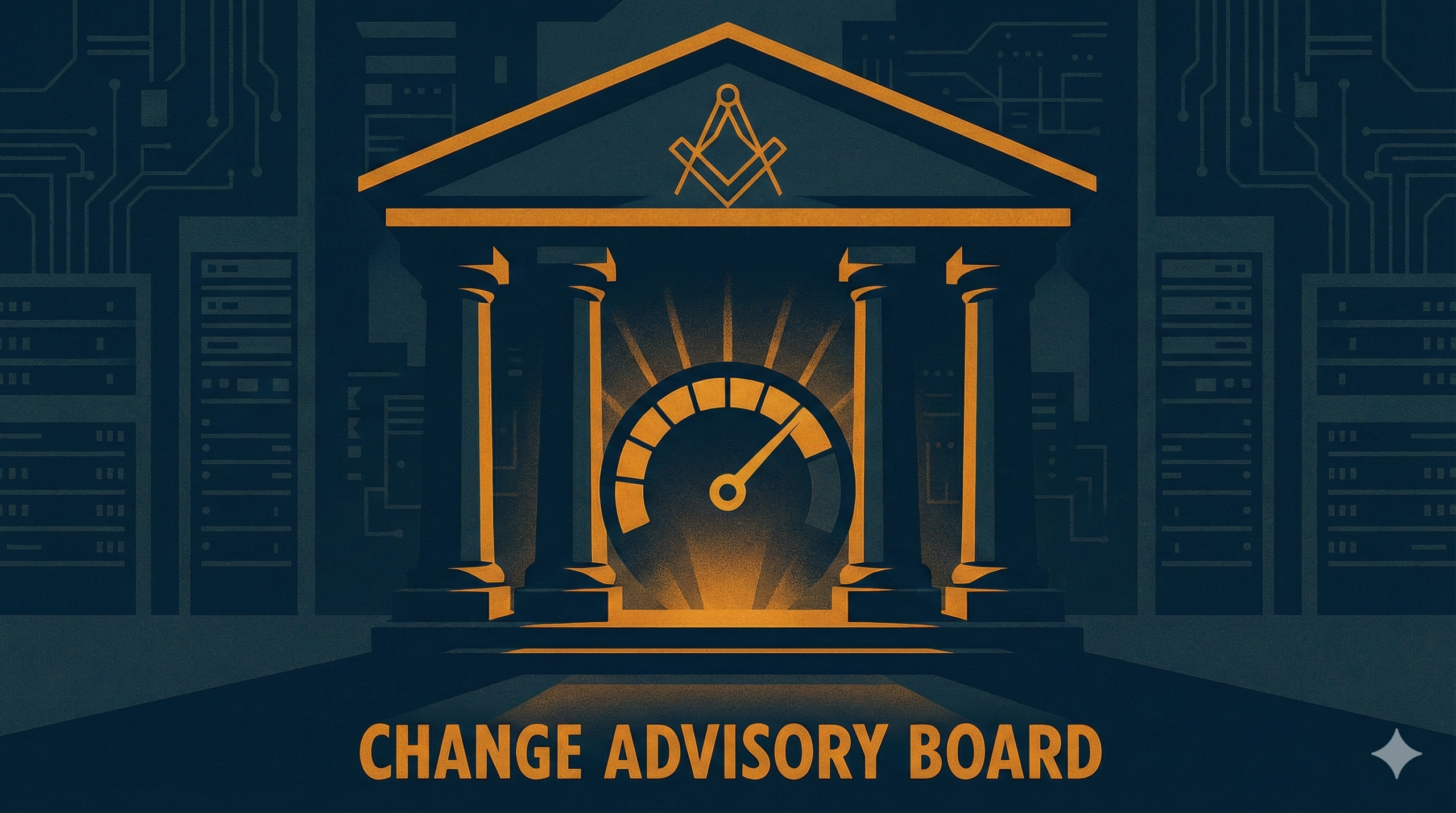
    What happens when you put Solomon’s Temple next to a modern error budget and ask them both what “perfection” really means? In this episode, we explore the idea that reliable service is not just a technical outcome but a moral consequence — the visible result of character, duty, and brotherly love expressed through IT work.

    Drawing on Freemasonry, Stoic philosophy, and the writings of Marcus Aurelius, we unpack what it means to work logarithmically toward an ideal you will never fully reach. We contrast the Masonic Temple and its working tools with SRE and ITIL principles: why 100% uptime is the wrong target, how continual improvement mirrors lifelong moral refinement, and how duty becomes the backbone of both spiritual life and professional reliability.

    Then we zoom in on the real builders of today’s “Temple”: the backup and recovery specialist guarding the sacred data; the infrastructure engineer hewing and setting the foundation; the Citrix/WebSphere/DB2 specialist adorning the inward workings; the mainframe programmer quietly automating away chaos; and the mainframe operator keeping vigil in the sanctum of production. By the end, your ticket queue, your runbooks, and your change windows look less like random toil and more like stonework on a shared, enduring structure.

    Source #1: ITILv4 Foundation

    Source #2: The Meditations by Marcus Aurellius

  • The Square and the Server

    The Square and the Server

    In this episode, Change Advisory Board draws a straight line from the lodge to the datacenter via the square, exploring how the symbolic working tools of Freemasonry — the gauge, gavel, square, level, plumb, compasses, and trowel — can be reinterpreted as instruments of modern Site Reliability Engineering.

    From the Entered Apprentice’s 24-inch gauge to the SRE’s time budgets and service-level objectives, each tool becomes a lens for understanding the moral and operational discipline behind reliable systems. The common gavel’s task of removing rough edges parallels how engineers refine noise from telemetry. The Fellow Craft’s square and level emerge as early templates for data integrity and fairness — the moral geometry of incident response. The plumb rule, once a test of uprightness, becomes the model for aligned observability: systems and people both measured against their true vertical.

    Finally, the Master Mason’s compasses and trowel remind us that every great system — like every enduring fraternity — is held together not by code alone but by the invisible cement of trust, accountability, and shared purpose. Observability, in this light, is not just about data; it is the moral act of ensuring that what we build is true, just, and aligned with the architecture of higher principles.

    It’s a conversation about craftsmanship in code and in character — an investigation into how the oldest working tools of humanity still guide the newest disciplines of reliability engineering.

    Source #1: The Lecture of the Second Degree of Freemasonry

    Source #2: Site Reliability Engineering edited by Betsy Beyer, Chris Jones, Jennifer Petoff, and Niall Richard Murphy