The Plumb Line of Institutional Resilience: A Weekly Sprint Scorecard
 Nicholas King (via Libsyn)
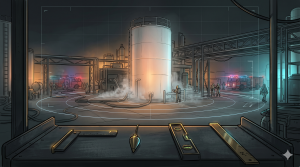
Traditional tools of precision remain perfectly still against a turbulent backdrop of institutional shocks and stalled infrastructure.
Meet on the Level, act by the Plumb, part upon the Square.
Institutional resilience is the load a country’s rule-keeping bodies can absorb without losing their line. The week of May 12–17, 2026 put that load to a sustained test — courts, parliamentarians, regulators, and allied tribunals all asked to hold the plumb against political pressure, labor disruption, and a foreign drone wave. This Weekly Sprint Scorecard reads the seven Daily Working Tools posts from this week through one question: who held the plumb line, and where did institutional resilience bend?
This week put a single question to every American institution worth the name: when shocks arrive — a power summit, a strike, a court ruling, a procedural objection, a drone wave — does the rulekeeper still hold the line, or does political momentum carry the room? Six calendar days, seven Daily Working Tools posts, one stress test. The center pin was not any single story. It was whether the people whose job is to slow things down still did so.
The Sprint Backlog: Seven Days of Working Tools
- May 12: When Great Powers Set the Table — Trump–Xi summit prep, Hegseth before Congress on Iran, eBay rejects GameStop, FDA ENDS authorization, Montana election-law block.
- May 13: When the Bridge Case Reaches Court — DOJ indictments over the Francis Scott Key Bridge collapse; the Carroll defamation payment is paused; Iran talks continue.
- May 14: When Beijing Tests Public Trust — Trump arrives in Beijing on Iran, trade, and Taiwan arms; selective World Cup entry-bond waivers; DOJ marks National Police Week.
- May 15: A Border Law Meets the Federal Line — Federal judge halts key parts of Texas SB 4; SCOTUS keeps mifepristone access steady; six found dead in a Union Pacific boxcar near Laredo.
- May 16: When the Busiest Line Stops — LIRR workers strike on North America’s busiest commuter rail; U.S.–Nigerian operation claims an ISIS leader; SCOTUS leaves Virginia map order in place.
- May 17 (AM): When the Rulekeeper Stops the Room — Senate parliamentarian blocks a White House security provision tied to ballroom funding; FDA acting-leadership turnover widens; diesel pressure on schools.
- May 17 (PM): When Europe Holds the Line — Russia launches 287 drones at Ukraine; London manages rival mass rallies; thirty-six countries back a Ukraine tribunal.
The Plumb Line: Measuring Institutional Resilience
The plumb is the Masonic test of uprightness, and institutional resilience is its civic translation. In hindsight, the goal of the week was simple even when the news was not: keep the measuring instruments calibrated. Courts, parliamentarians, regulators, allied bodies — each was asked to slow a moving train so it could be inspected. Some did. Some did not. The week’s real increment is not any single ruling or rally; it is the cumulative answer to whether the country (and its closest allies) still trust slow procedure when fast pressure shows up.
The Skirret: This Week’s Center Line
Two events anchor the week’s chalk line. The first is the Senate parliamentarian halting the White House security provision on May 17. The parliamentarian is the least telegenic office in Washington, and that is the point: the job exists to enforce the rules of the room when the room is loud. A procedural ruling stopped political momentum at the door — a textbook moment of institutional resilience.
The second is the federal injunction against parts of Texas SB 4 on May 15. A district judge paused a state immigration arrest regime before its effective date, on the grounds that immigration enforcement is reserved to federal authority. Whatever a reader thinks about border policy, the line being drawn here is structural: states cannot recreate federal power by repackaging it. Both events, on opposite ends of the political spectrum, were rulekeepers refusing to be swept along.
The Pencil: What Was Actually Written
The week opened with a stage being set rather than struck. On May 12, great powers were lining up the table: a Trump–Xi summit on trade, Taiwan, Iran, and AI; the Defense Secretary in front of Congress on the Iran war; eBay declining a $55.5 billion approach from GameStop; the FDA authorizing new ENDS products under access controls. Nothing detonated. Everything was positioning.
By May 13, the pencil moved from positioning to consequences. DOJ unsealed indictments tied to the Francis Scott Key Bridge collapse, naming foreign ship operators and a technical superintendent for the 2024 disaster. The Second Circuit paused payment on the $83 million Carroll defamation judgment. Iran talks continued — but with a presidential statement that household financial strain was not a factor, a tell about whose pressure was being measured and whose was not.
May 14 brought Beijing: Iran, trade, and Taiwan arms sales all on the agenda. The State Department waived entry bonds for some World Cup ticket holders while keeping others in place — a quiet asymmetry. The DOJ marked National Police Week as the White House promoted crime-drop claims. Public trust was being asked to extend itself across foreign policy, immigration enforcement, and statistical messaging at once.
May 15 narrowed back to law. The Texas SB 4 injunction drew the federal line. The Supreme Court let mifepristone remain available by mail and telehealth while a lower-court case continued — preserving the status quo rather than imposing a new one. And in Laredo, six people were found dead in a Union Pacific boxcar, a reminder that the border still kills people while the legal machinery argues over it.
May 16 was the day the rails stopped. LIRR workers struck and suspended service on the busiest commuter rail system on the continent. U.S. and Nigerian officials announced the killing of an ISIS leader in the Lake Chad Basin. The Supreme Court declined to revive Virginia’s Democratic-favored congressional map. Three institutional surfaces — labor, military, electoral — all bore weight on the same day.
May 17 brought a double feature. In the morning, the Senate parliamentarian blocked a White House security request tied to a ballroom funding line; the FDA lost another acting leader; diesel costs began to gnaw at school budgets. In the afternoon, the lens turned east: Russia threw 287 drones at Ukraine with 279 intercepted or suppressed; London ran one of its largest recent public-order operations to manage rival rallies; thirty-six countries moved toward a tribunal for the crime of aggression against Ukraine.
The Compasses: Who Stayed Within Bounds
The Compasses set limits and proportions. Several actors stayed inside them this week, according to the available sources.
The Senate parliamentarian stayed inside the bounds of the office. The role is to apply procedure without regard to the popularity of the requestor; the May 17 ruling did exactly that. The federal district court reviewing Texas SB 4 stayed inside its bounds too — applying preemption doctrine before a contested law took effect rather than letting confusion run live. The Supreme Court declined to act twice this week when acting would have moved the line — on the Virginia map and on mifepristone access — which reads as restraint rather than activism. Restraint, in this register, is institutional resilience expressed as patience.
Other actors brushed against the limits. The available facts suggest the White House’s pursuit of ballroom funding under a security umbrella stretched the proper use of an appropriations vehicle; the parliamentarian’s ruling is the available evidence of that overreach, not a verdict on intent. The joint U.S.–Nigerian counterterrorism announcement deserves scrutiny rather than applause until the operation’s details are independently confirmed. And the State Department’s selective entry-bond waiver for World Cup ticket holders deserves a clear public rationale — equal treatment is a Compasses question even when the underlying policy is defensible.
Russia’s drone wave on May 17 stands outside the bounds entirely, by the plain reading of the public record. The Council of Europe’s tribunal push is the visible work of pulling that conduct back inside a law.
Who Felt the Weight of the Week?
The Average Person
A Long Island commuter started the work week not knowing how to get to the office. A school administrator in any diesel-dependent district started running the math on routes. A patient on mifepristone got to keep the access arrangement they already had, at least for now. A Virginia voter learned that their district lines, as drawn, will be the ones they live with through the midterms. None of this requires a partisan opinion to register at the kitchen table; it requires only an alarm clock and a calendar.
The Small Business Owner and Executive
For a small operator, the week’s weight came from three places: fuel, freight, and federal-authority uncertainty. Diesel pressure shows up in delivery contracts and school transportation bids alike. The LIRR strike re-priced one workweek of commuter-dependent retail and service on Long Island. The SB 4 injunction matters for any employer balancing state and federal compliance at the border. For executives in larger seats, the Beijing positioning changed nothing about supply chains this week but flagged that it could change everything next week.
The Political Reality
Rulekeepers had a good week and incumbents had a mixed one. The parliamentarian’s ruling and the SB 4 injunction both denied momentum to executive action. The Court’s restraint on the Virginia map and mifepristone did the same to fast-moving political demands from both sides. Coalitions that depend on speed — on any side — were slowed. The doable next step is not new legislation; it is honest accounting of what each institution did and did not do, before the next sprint begins.
Institutional Resilience Scorecard: The Working Tools
 |
Common Gavel Procedural objections trimmed the ballroom funding request, but rhetorical excess around crime-drop messaging and Iran talks went largely unchipped. |
C |
 |
24-Inch Gauge A halted LIRR shift, widening FDA acting vacancies, and a Beijing trip all suggest leadership time was poorly divided this week. |
D |
 |
Level The SB 4 injunction and mifepristone access ruling held equality before law steady; the selective World Cup bond waiver leaned the other way. |
B |
 |
Plumb The parliamentarian, the SB 4 court, and the Carroll-payment pause all walked the plumb line; the bridge indictments name uprightness owed long ago. |
B |
 |
Square Courts and the Senate parliamentarian squared official actions to rule and precedent across multiple high-pressure moments this week. |
A |
 |
Trowel Drone strikes on Ukraine, rival London rallies, and the Laredo boxcar deaths show how little cement was spread to bind public life this week. |
D |
Definition of Done: What’s Finished, What’s Not
Done:
- The Senate parliamentarian’s ruling on the White House security provision — the procedural call is in.
- The federal injunction against parts of Texas SB 4 — the pre-effective-date pause is on the record, even as the underlying case continues.
- The Supreme Court’s denial of the emergency request on Virginia’s congressional map — that map governs the midterms.
- The DOJ’s Francis Scott Key Bridge indictments — charges are filed; the criminal phase has begun.
- The Second Circuit’s pause on the $83 million Carroll defamation payment — the bond and pause are set while review is sought.
Not Done:
- The LIRR strike — service suspension and contract negotiation continued past Saturday with no settlement in evidence.
- The FDA leadership rebuild — acting leadership widened rather than narrowed.
- The Trump–Xi summit agenda — talks were staged but outcomes on Iran, trade, and Taiwan arms remain undocumented.
- The Laredo boxcar investigation — the cause of death and routing remain officially open.
- The Council of Europe tribunal for aggression against Ukraine — coalition support is forming; the body itself is not yet built.
Next Sprint Watchlist
- LIRR settlement timing and rider impact. A second workweek of suspended service shifts the cost story from inconvenience to lost wages and political pressure on the Governor.
- Texas SB 4 appeal posture. Whether the state seeks an emergency stay tells you how much weight Texas wants to put on the federal-preemption fight in court this cycle.
- FDA acting-leadership replacements. Three acting roles inside one agency is a continuity-of-operations issue, not just a personnel one.
- Council of Europe tribunal text. The jurisdictional language for a crime-of-aggression tribunal will determine whether thirty-six signatures become a working institution or a press release.
- Post-Beijing readouts on Iran, trade, and Taiwan arms. Watch the parallel American, Chinese, and allied statements; gaps are where the real disagreements live.
The Weekly Sprint is a personal moral and civic synthesis of the week’s Daily Working Tools posts using public sources. It does not speak for Freemasonry, any Lodge, or any Grand Lodge.